Why Blue Candy Fights Back: A Behind-the-Counter Field Report

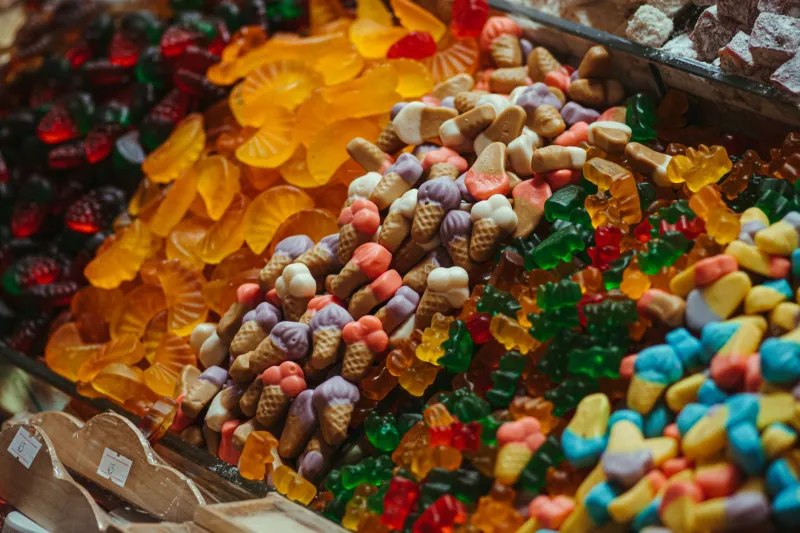
Photo: blue candy assortment artisanal sweets display case, via wallpapers.com
Blue candy looks effortless. A little sapphire bonbon here, a turquoise gummy there, maybe a royal-blue lollipop leaning against the counter like it owns the place. Behind the scenes, blue is less of a show-off and more of a tiny diva with a rider full of demands. At Miss Emily's Blue Bee Bar, we have learned to respect the blue. We have also learned to keep a towel nearby.
Blue Is the Bossy Color
Blue is rare in the food world for good reason. Most fruits and vegetables show off reds, purples, oranges, yellows, and greens, but true blue pigments are less common in nature. That means candy makers cannot simply squeeze a blueberry and call it a day. Blueberries lean purple. Blackberries lean moody. Even the most promising natural blue ingredients arrive with opinions, limitations, and a flavor that may or may not belong in a marshmallow.
There is also the matter of expectation. When a customer sees a blue sweet, the brain starts guessing: berry? mint? ocean? bubblegum? Blue has no single flavor passport. It is a color with a mysterious backstory, and every candy maker has to decide what that backstory tastes like.
The Natural Blue Toolbox (and Its Attitude)
Two natural blue sources come up often in confectionery conversations: spirulina and butterfly pea flower. Both are talented. Both require patience.
Spirulina is a blue-green algae that can push candy toward a vivid blue when used carefully. The catch is that it can bring an earthy, seaweed-adjacent note if the dose gets too enthusiastic. In a smoothie, that flavor might have a health-food alibi. In a delicate white chocolate bark, it needs a firm talking-to. Spirulina also does not love prolonged heat, so timing matters.
Butterfly pea flower is the friendlier cousin at the color party. It gives a lovely blue infusion, especially in liquids, and it has a subtle floral flavor. Its party trick is pH sensitivity: add something acidic, such as lemon juice, and the color can shift toward purple or pink. That is delightful for a family experiment and mildly alarming when you are trying to produce a consistent batch of blue lollipops.
Some candy makers use FDA-approved synthetic blue colors for reliability and brightness. Others lean natural whenever possible. At our shop, the goal is not to declare one path morally superior. The goal is to make a treat that looks blue, tastes good, and does not confuse anyone into thinking they have bitten into a pond.
Flavor Is Where Blue Gets Sneaky
Here is the uncomfortable truth: blue does not have a flavor. Purple often gets grape. Red gets cherry, strawberry, or a vague fruit punch situation. Blue gets a shrug and a marketing meeting.
That means blue candy is often flavored with raspberry, blueberry, cotton candy, mint, or a cheerful mystery flavor that exists mostly to support the color. At Miss Emily's Blue Bee Bar, we like to pair blue with bright, clean flavors that can stand up to the color's drama. Citrus, vanilla, berry, and a whisper of honey are reliable teammates. Honey is especially welcome because it brings warmth without competing for attention.
The trick is balance. Too little blue color and you get a sad gray-blue that looks like a cloudy Tuesday. Too much natural blue and the flavor starts introducing itself as algae. The sweet spot is narrow, which is why blue batches tend to be smaller, slower, and more closely supervised than their cheerful yellow cousins.
How We Wrestle Blue Into Shape at the Bar
Our approach is part science, part stubbornness, and part taste-testing with people who will tell us the truth. We test color in small batches, because a tiny disappointing batch is a lesson, while a giant disappointing batch is a tragedy with a receipt. We also taste the color source by itself before it goes anywhere near a finished confection. If the ingredient needs an apology, it is not ready for the display case.
Temperature and sugar are other wild cards. Candy making already involves hot sugar, precise timing, and the emotional stability of a person waiting for caramel to reach the right shade. Add a natural blue ingredient that may shift under heat or acidity, and you have a recipe that demands attention. We keep notes. We label jars. We do not answer the phone during the blue pour.
And yes, we embrace the occasional happy accident. A blue that leans lavender can become a twilight-themed treat. A slightly green-blue can become a mermaid situation. The trick is to make the result intentional, delicious, and pretty enough that nobody asks whether the kitchen had a minor crisis. (It did. It recovered.)
Family Lab: Three Tiny Blue Experiments
Curious families can explore blue color at home without turning the kitchen into a chemistry lab with sprinkles. Start small, keep it edible, and remember that pretty does not always mean tasty.
1. Butterfly pea color shift. Brew plain butterfly pea tea, let it cool, and pour it over ice. Add a squeeze of lemon juice and watch the color change. This is a pH experiment disguised as a beverage, which is the best kind of science.
2. White chocolate color test. Melt a small amount of white chocolate and stir in a tiny bit of blue spirulina powder. Taste a cooled dab before committing a whole batch. You are checking both color strength and whether the flavor is welcome. Spoiler: use less powder than you think.
3. The blind taste test. Offer family members two blue treats with different flavors, such as berry and vanilla, and ask them to guess what blue should taste like. The answers will be chaotic, which is the point. Blue is a color, not a flavor, and everyone's brain has a different opinion.
The Blue Bee Verdict
Blue candy is harder than it looks because it asks a maker to solve three puzzles at once: color, flavor, and consistency. That is also why it is fun. A blue treat should feel a little magical, a little mischievous, and completely worth the trouble. At Miss Emily's Blue Bee Bar, we will keep wrestling the blue, tasting the blue, and occasionally apologizing to the blue. Then we will put it in the case, step back, and let it look effortless after all.