Sweeten the Swarm: How to Swap Honey Into Your Favorite Baked Goods (Without Losing Your Mind)
Pull up a stool at the Blue Bee Bar, friends, because today we're talking about the one ingredient that runs this whole operation: honey. Not the squeeze-bear kind from the back of your pantry that's crystallized into something resembling fudge — we mean the good stuff, the local, golden, tastes-like-a-meadow-in-June kind.
If you've ever wondered whether you can swap honey for sugar in your grandmother's chocolate chip cookie recipe without causing a kitchen catastrophe, the answer is a resounding yes. But — and this is a big, fuzzy, bee-shaped but — you can't just trade cup for cup and call it a day. Honey is a diva. It has needs. Here's everything we've learned from behind the counter, often the hard way.
The Golden Rules of the Honey Swap
Honey isn't just sugar in liquid form. It's roughly 80% sugars and about 17-18% water, which means when you pour it into a recipe, you're adding moisture that granulated sugar never brought to the party. Ignore this fact and you'll end up with cookies that spread into one giant, sad, cookie-shaped puddle across the entire sheet pan. (We've been there. We named the puddle Gerald.)
So here are the rules we live by:
1. Use less honey than you would sugar. Honey is sweeter than table sugar, so for every 1 cup of sugar your recipe calls for, use about 2/3 to 3/4 cup of honey. Your sweet tooth won't know the difference, but your waistline might send a thank-you note.
2. Reduce the other liquids. For every cup of honey you use, dial back the other liquids in the recipe by about 1/4 cup. Making banana bread? Skip a couple of tablespoons of milk. Your batter should look like batter, not pond water.
3. Add a pinch of baking soda. Honey is naturally acidic, and a little baking soda (about 1/4 teaspoon per cup of honey) helps neutralize that tang while giving your bake an extra lift. Fluffier muffins, happier mornings.
4. Lower the oven temperature by 25°F. Honey caramelizes faster than sugar, which is lovely for flavor and tragic for edges. If your recipe says 350°F, go 325°F and check a few minutes early. Darker pans — we're looking at you, trusty Chicago Metallic — run even hotter, so keep an eye out.
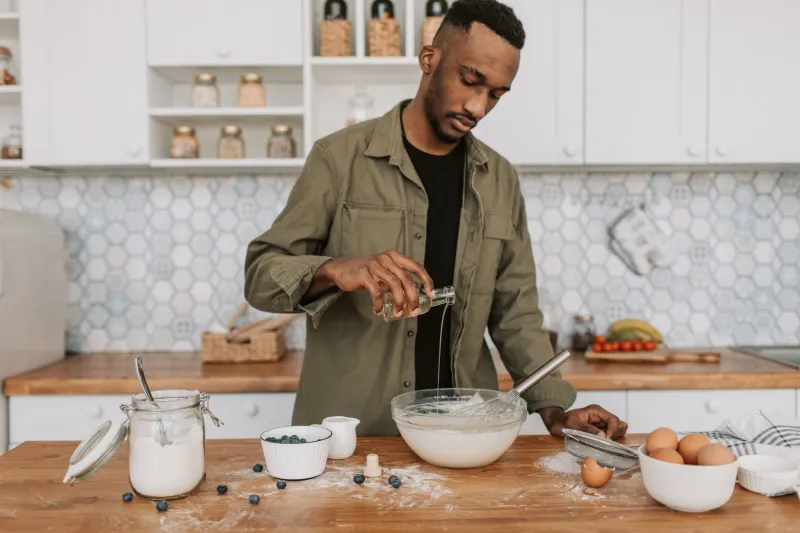
5. Oil your measuring cup. Honey clings to everything like a toddler who just discovered glitter. Coat your measuring cup with a whisper of neutral oil or cooking spray first, and the honey will slide out like it's leaving a five-star review.
Why Honey Makes Everything Moister (Thanks, Bees)
Here's the science bit, served with a wink: honey is a humectant, which is a fancy word meaning it attracts and holds onto water. Fructose — honey's star player — is especially greedy about it. That's why a honey-sweetened cake on day three is still tender and lovely, while its all-sugar cousin has gone dry enough to qualify as drywall.
At the Blue Bee Bar, this is the whole reason our honey lemon loaf sells out by noon. The honey keeps it soft, the lemon keeps it bright, and the bees keep it all going. We're just the middlemen in tiny aprons.
Seven Swaps Worth Trying This Weekend
Ready to get sticky? Here's our shortlist of American classics that take beautifully to honey:
- Chocolate chip cookies — Swap in honey and chill the dough for at least an hour, or the bees' blessing won't save you from spreading. Expect chewier, golden-edged cookies with a subtle floral note.
- Banana bread — Honey and overripe bananas are a match made in heaven. Use about 3/4 cup honey for every cup of sugar, and thank us later.
- Cornbread — A Southern staple that practically begs for honey. Whisk it into the batter and keep some on the table for drizzling. No judgment here.
- Peanut butter cookies — Honey amplifies that nutty, toasty flavor. Cross-hatch with a fork, bake low and slow.
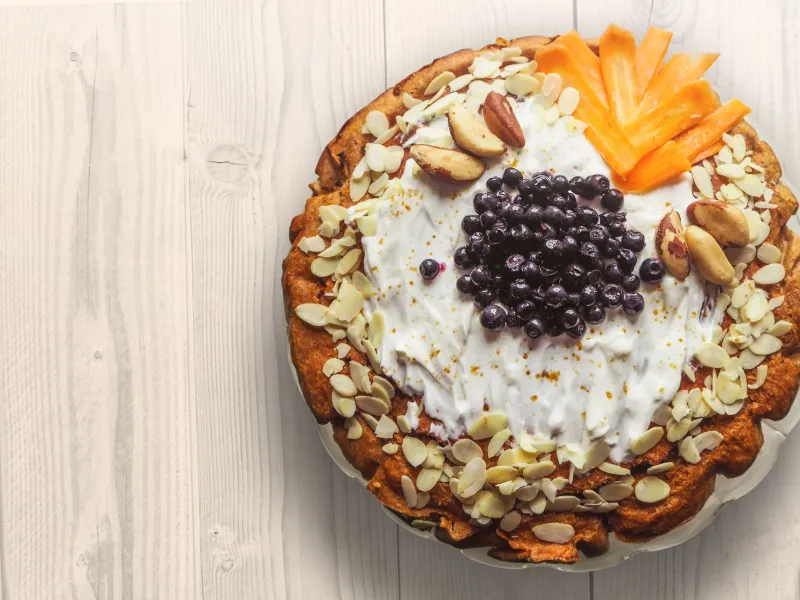
- Quick glazes and frostings — Replace up to half the powdered sugar in a cream cheese frosting with honey for a glossy, tangy finish. Dreamy on carrot cake.
- Granola and snack bars — Honey doubles as the binder here. Bake low until golden, let cool completely, then break into rustic, Instagram-worthy clusters.
- Pound cake — A honey-sweetened pound cake stays moist for days, which in our house means it survives until day two. Barely.
A Word on Flavor Pairing
Not all honey tastes the same, and that's half the fun. Clover honey is mild and friendly — the golden retriever of honeys. Wildflower brings a little personality. Orange blossom is sunshine in a jar, and buckwheat is dark, moody, and dramatic, like the espresso of the honey world. Match bold honeys with spice cakes and gingerbread; save the delicate ones for sugar cookies and shortbread.
One Last Buzz
Baking with honey takes a little practice, a little patience, and occasionally a little dish soap. But once you taste that first honey-kissed cookie — chewy, fragrant, faintly floral — there's no going back to the plain white stuff.
So preheat that oven, oil that measuring cup, and get buzzing. And if you end up with a cookie puddle of your own? Name it, learn from it, and come tell us about it at the counter. Gerald would love the company.
Happy baking, honey! — Miss Emily